
⚠ Aerosol – shipping restrictions
Cannot be shipped to PO Boxes, Parcel Lockers, Tasmania, the Northern Territory or some other locations. Courier restrictions apply.
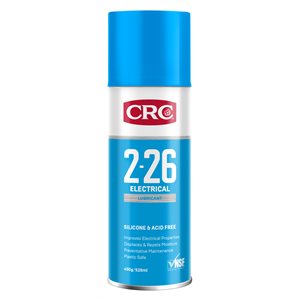
CRC 2-26 — electrical lubricant, penetrant and moisture displacer
A plastic-safe, silicone-free lubricant that displaces water, restores electrical properties after moisture exposure and leaves a thin, self-repairing film that seals out moisture and corrosion.

Keeps electrical gear dry and working
CRC 2-26 gets under moisture, pushes it out and leaves an ultra-thin protective film — helping prevent faults caused by water, humidity, condensation and corrosion.
- Displaces water from electrical parts
- Restores electrical properties after water exposure
- Thin, self-repairing protective film
- Lubricates and penetrates
- Inhibits corrosion
- Plastic safe and silicone free
Connectors, motors and electrical systems
Electrical connectors
Protect connectors and terminals from moisture and corrosion — relevant to outdoor and touring rigs.
Motors & generators
Displace moisture and protect motors and generators.
After water exposure
Help restore equipment that has been exposed to rain, condensation or damp storage.
Contact re-lubrication
Re-lubricate sliding and rotating contacts after cleaning with CRC 2017.
Telecom & navigation gear
Listed by CRC for communications and navigation equipment.
Light degreasing
Removes fingerprints and light grime while leaving a protective film.
What it is — and what it isn’t
Use it for
- Electrical connectors, terminals and switchgear
- Displacing moisture after rain or condensation
- Re-lubricating contacts after cleaning
- Corrosion protection on electrical parts, including plastics
Don’t use it for
- Live (energised) equipment — de-energise first
- Heavy lubrication — it’s a light film, not a grease
- Deep cleaning flux or heavy grease (use CRC 2017 first)
- Use near heat or ignition sources — flammable aerosol
Getting the best result
- Switch off and de-energise the equipment.
- To protect: spray a light, even film over the parts.
- To free stuck parts: spray liberally and allow time to penetrate.
- For equipment exposed to water: spray all surfaces and allow 2–24 hours for moisture to be displaced before use.
- Use the extension tube for tight areas. Test colour-fastness on a small area when cleaning.
Key details
| Official name | CRC 2-26 Electrical (Multi-Purpose Lubricant/Penetrant) |
|---|---|
| Product code | 2005 |
| Size | 450 g aerosol |
| Dielectric breakdown | 42,000 V (per CRC TDS) |
| Film thickness | 1–2 microns, self-repairing |
| Coverage | 100–140 m²/L |
| Registration | NSF H2 (no food contact) |
| Base | Paraffinic oil, silicone free; CO₂ propellant — flammable aerosol |
Common questions
What is CRC 2-26 used for?
Protecting and lubricating electrical equipment. It displaces water, restores electrical properties after moisture exposure and leaves a thin film that prevents corrosion on connectors, motors, generators and switchgear.
Is CRC 2-26 safe on plastic?
Yes — CRC describes it as plastic safe. It’s still good practice to test a small area first.
What’s the difference between 2-26 and 5-56?
2-26 is made for electrical systems and is plastic safe, with a very thin film. 5-56 is a general-purpose penetrant and lubricant for freeing and protecting mechanical parts.
Can I spray it on live equipment?
No. Always switch off and de-energise first.
Should I use it after a contact cleaner?
Yes. Contact cleaners like CRC 2017 strip lubricant; 2-26 restores a protective, lubricating film on sliding or rotating contacts.
Always read the product label and Safety Data Sheet (SDS) before use. Flammable aerosol unless stated; use with good ventilation, keep away from ignition sources and never use on live (energised) equipment. Test on a small hidden area first — results depend on the surface, conditions and application. Specifications are from CRC technical data and are a guide only.
Need help choosing?
Tell us what you’re working on and we’ll point you to the right product for the job.