
How to Apply Rosco Foamcoat: Step-By-Step Guide
In brief: Applying Foamcoat is simple: clean the foam, stir well, apply thin coats by brush, roller or hopper gun, let each layer dry, then allow around 24 hours for full cure before sanding and painting. This page walks through the process step-by-step.
Applying Rosco Foamcoat is straightforward, but a few professional techniques can make a massive difference in strength, texture, and finish. Below is a clear step-by-step guide used by scenic shops, prop builders, event teams, and fabricators who need reliable results on foam.
Whether you’re coating carved EPS blocks, sculpted pink foam, CNC-cut pieces, or custom props, this guide will help you get a durable, clean, paint-ready finish every time.
Foamcoat Technical Specs (Quick Reference)
Type: Water-based, non-toxic, flame-retardant hard coating
Finish: Off-white matte
Coverage: ~150 sq. ft. per gallon (12–16 m²)
Dry Time: 2–8 hours between coats
Full Cure: ~24 hours
Application: Brush, roll, or hopper spray gun
Workability: Sandable & carvable after curing
Compatibility: Works with Rosco scenic paints & most acrylics
Packaging: 1 Gallon (3.79 L)
Looking for deeper details? You can see the full technical specifications and product information on the Foamcoat product page.
What You Can Apply Foamcoat With
Foamcoat works with three common tools:
Brush — great for detail work, smaller builds, and control
Roller — best for quick coverage on flat or broad surfaces
Hopper Spray Gun — ideal for large sets, rockwork, and texture builds
For most scenic shops, a combination of brush + roller is enough. Spray application is a huge time-saver for larger scenic pieces or textured finishes.
Surface Prep: Get the Foam Ready
Foamcoat sticks best to clean, dust-free surfaces. Before applying:
Remove loose foam particles
Brush away dust from carving or CNC cutting
Ensure the foam is dry
If working on wood or plastic, prime it first with Rosco Tough Prime
Clean prep ensures the hard coat bonds smoothly without peeling or patchiness.
Step-By-Step: How to Apply Rosco Foamcoat
1. Stir the product thoroughly
Foamcoat contains mineral fillers that settle over time. Stir well until the mixture becomes smooth and even.
2. Apply your first coat (thin coat)
Start with a thin, even coat. This preserves carved detail and builds your bonding layer.
Use a brush for grooves and contouring
Use a roller for broad, flat areas
Use a hopper gun for large sets or textured effects
3. Allow the first coat to dry
Dry time varies depending on temperature, humidity, and thickness:
Typically 2–8 hours to dry to the touch
Cooler or humid spaces may take longer
4. Build additional coats if needed
For most projects, 1–2 coats adds enough protection. For high-impact scenic pieces, prop shops often apply:
3–4 coats on high-traffic edges
Extra layers on corners or areas prone to knocks
Thin coats always perform better than one thick layer.
5. Let the piece cure fully
Full cure takes roughly 24 hours. This is when Foamcoat reaches its maximum hardness and is ready for:
Sanding
Carving
Detailing
Painting
Professional Tips for a Better Finish
Add texture intentionally
Foamcoat is excellent for creating stone, masonry, bark, dirt, plaster, and terrain textures. Scenic artists often stipple, scrape, or dab the coating while wet to build character.
Sanding and refining
After curing, you can sand Foamcoat for:
Smooth architectural finishes
Refining carved foam shapes
Reducing texture for top-paint layers
Use a hopper gun for fast coverage
For large themed environments or rockwork, spraying Foamcoat with a hopper gun dramatically speeds up production while adding natural, organic texture.
Foamcoat In Action: Real Application Examples
Here are a few real projects that show how Rosco Foamcoat is applied step by step. You can see the journey from raw foam to coated surface to fully painted and finished pieces.
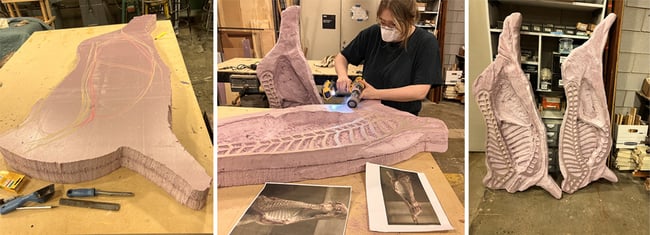
Image and project courtesy of Rosco Spectrum.
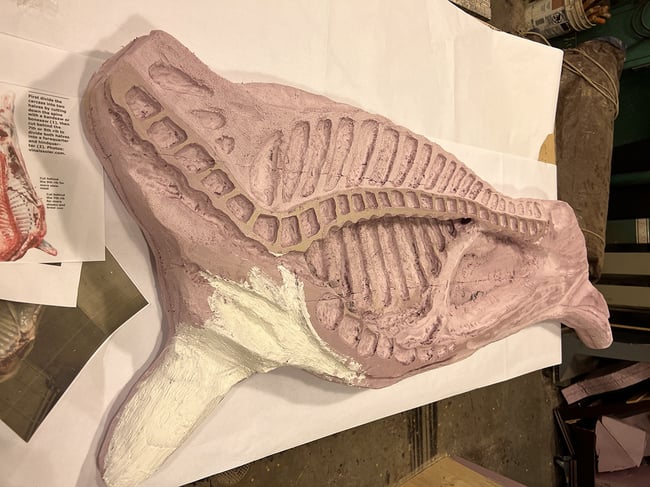
Image and project courtesy of Rosco Spectrum.
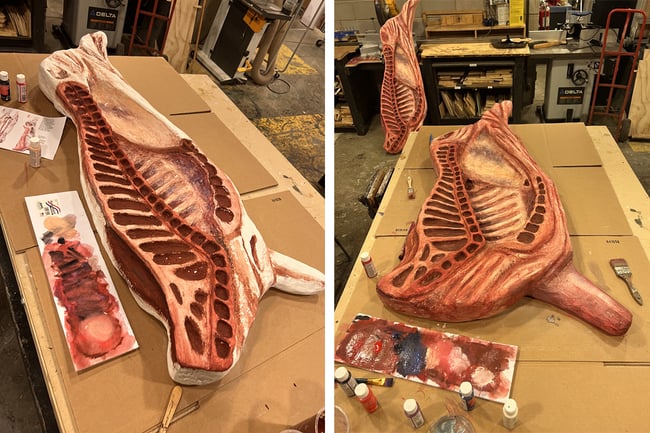
Image and project courtesy of Rosco Spectrum.

Image and project courtesy of Rosco Spectrum.

Image and project courtesy of Rosco Spectrum.
These examples follow the same basic workflow we recommend in the guide above: clean foam, carve, apply Foamcoat in thin coats, let it cure, then paint and finish.
Want to Learn More About Foamcoat?
If you’d like full specifications, SDS, application notes, or packaging details, you can view everything on the Foamcoat product page.