
Rosco Tough Prime: The Scenic Primer & Sealer Guide
Rosco Tough Prime · Scenic primer & sealer · AU & NZ
Rosco Tough Prime: The Scenic Primer & Sealer Guide
A practical hub for scenic artists, set builders and educators using Tough Prime as a primer and sealer before scenic paints. (We’ll cover Tough Prime specifically as a stage paint in a separate page.)
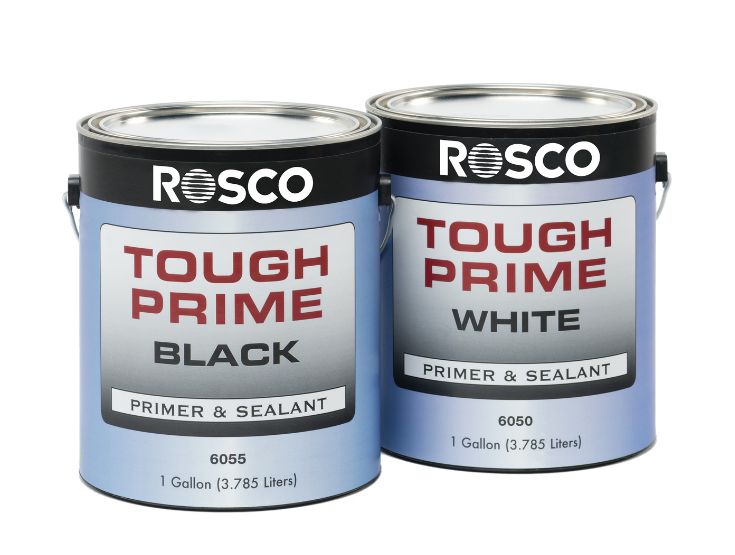
Why scenic shops use it
Four reasons it sits under the scenic paint
Primer + sealer
Seals porous surfaces and creates a paint-ready film for scenic coatings.
Bonds to difficult substrates
Formulated to grip materials that many primers struggle with.
Fast turnaround
Quick dry and recoat times help keep builds moving.
Scenic paint compatible
Designed to sit under Rosco scenic systems (and most other paints).
The basics
What is Tough Prime?
Tough Prime is a water-based acrylic primer with special bonding properties for common “problem” materials found in scene shops and build environments. It dries to a durable, water-resistant coating that can be painted over with most water-based or solvent-based paints (always test if unsure).
Common surfaces it’s used to prime and seal
- PVC plastics and other plastics
- Aluminium and other metals
- Foams and foamcore
- Muslin and scenic fabric (where appropriate)
- Wood, MDF, ply and scenic flats
Choosing
White vs Black: Which Tough Prime Should You Use?
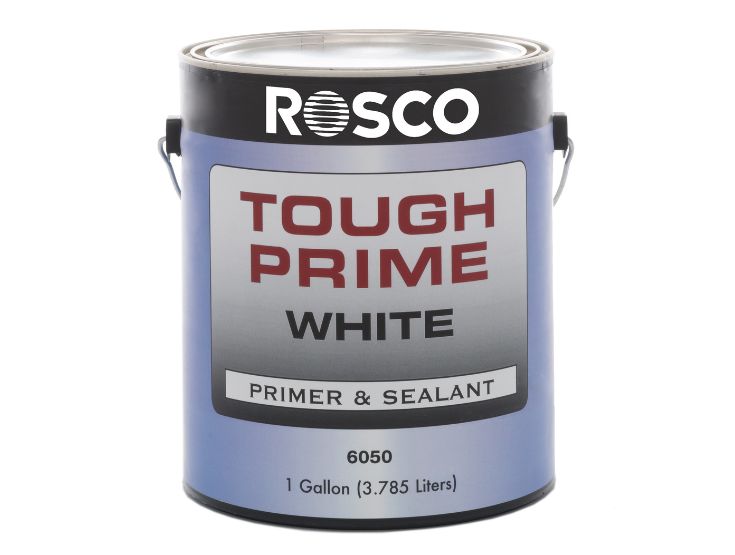
Tough Prime White
- Best as a universal prep coat under scenic paints where you want accurate colour reads and clean coverage.
- Ideal for bright palettes, pastels, whites, and any scenic finish where you’re chasing vibrancy.
- Great for drops, flats and scenic builds when you want consistent paint absorption and less patchiness.
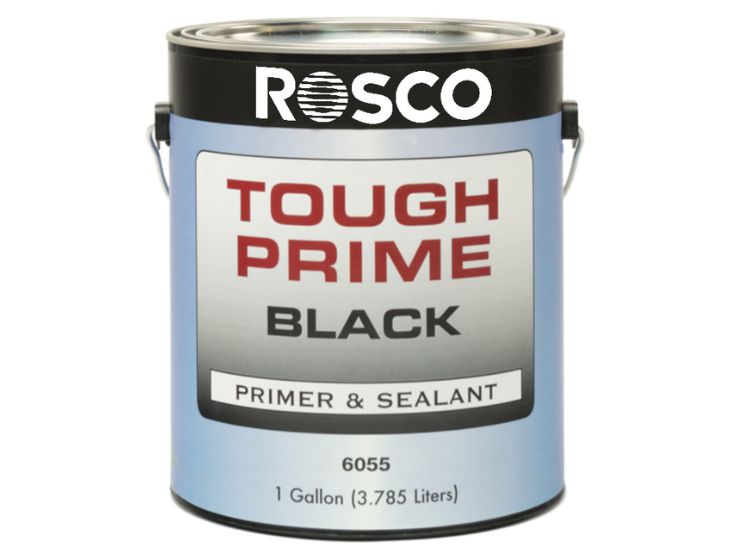
Tough Prime Black
- Best when your finish needs a black base (deep dark scenic looks, low-light environments, or when painting black scenic elements).
- Useful for blocking out before building highlights, metallics, faux finishes and ageing layers.
- Often used on stage decks because it bonds well and provides a durable base—however we’ll cover the “stage floor finish” use-case in a separate page.
Under scenic paint
Why Tough Prime Works So Well Under Scenic Paints
In scenic painting, the goal isn’t just “paint sticks.” It’s: consistent absorption, predictable colour, controlled sheen, and a stable surface for layers, washes, glazes, and textures.
Tough Prime as a primer
- Creates a reliable bond on “difficult” materials.
- Gives scenic paints a consistent base to grip, reducing flaking and premature wear.
- Supports clean masking and tape work when fully cured (always test your tape on a sample first).
Tough Prime as a sealer
- Seals porous substrates to reduce blotchiness and uneven paint suck-in.
- Helps your top coats behave more predictably—especially important for scenic washes and layered techniques.
- Can reduce the amount of “finish paint” needed by improving coverage efficiency.
Scenic-shop practical guide
How to Use Tough Prime
Prep
- Ensure surface is clean, dry, and grease-free.
- Remove any loose paint or contamination.
- For glossy or solvent-based finishes: scuff-sand to create tooth, then remove all dust.
Application
- Stir thoroughly (do not shake).
- Apply by brush, roller, or spray.
- Use even, uniform coats—avoid heavy coats.
- Overlap strokes, keep a wet edge, and change roller direction to avoid patterns.
- For durability: apply several thin coats, allowing each to dry before recoating.
Dry / recoat
- Dries to touch in roughly 30–45 minutes (under normal conditions).
- Typically recoat in 1–2 hours depending on environment and substrate.
Hot, humid, cold, or non-porous surfaces will change dry times—test your workflow on a sample panel.
Tinting
Tough Prime can be tinted to a “near-base” colour (for example: undercoating a warm scenic wall, or reducing coats needed on strong colours). Rosco notes it can be tinted using Supersaturated Rosco Scenic Paint, colorants, and other water-based paints.
Helpful for estimating
Quick Specs
| Coverage | approx. 300 sq ft per gallon (≈ 28 sq m per 3.79L), depending on substrate and method. |
|---|---|
| Film thickness | approx. 3 mil dry film. |
| Cleanup | soap and water. |
| Packaging | 1 gallon (3.79L) and 5 gallon (18.95L). |
| Product IDs (Rosco) | Tough Prime White (Gallon / 5 Gallon), Tough Prime Black (Gallon / 5 Gallon). |
Case study
Case Study Snapshot: Tough Prime Black in a Theatre
Rosco shared a theatre example where Tough Prime Black was rolled over an existing grey deck, covering efficiently and holding up through heavy seasonal use. This is a good indicator of the product’s durability and “scene-shop practicality” (fast prep, easy roll-on, reliable coverage).
Full article: Tough Prime Black – The Perfect Choice for Stage Floors →


Scenic artist focused
Tough Prime FAQs
Is Tough Prime only for wood?
No — it’s designed specifically to bond to hard-to-prime materials commonly found in scenic builds (including plastics, metals, foams, fabric and wood), while also sealing porous substrates for more consistent scenic paint behaviour.
Do I still need a separate plaster sealer?
For raw/new plaster, it’s common to start with a commercial primer/sealer designed for new plaster first. Then use Tough Prime as the final scenic prep layer for compatibility and predictable scenic paint performance.
Can I paint over Tough Prime with any scenic paint?
Rosco notes Tough Prime is compatible with Rosco Scenic Paints and most other paints. If you’re using a non-standard coating, always test a sample panel first.
Why am I getting poor adhesion or peeling?
The usual causes are contamination (dust/oil/release agents), painting over gloss without scuff-sanding, or applying heavy coats. Clean thoroughly, scuff glossy surfaces, and apply thin uniform coats with proper dry time.
White or Black — what should I choose as a base?
Choose White for clean colour reads and bright palettes. Choose Black when you need a black base, deeper scenic looks, or you’re building highlights and effects on a dark foundation.
Has Rosco Tough Prime Black been slip resistance tested in Australia?
Yes. Rosco Tough Prime Black has been independently tested by a NATA-accredited Australian laboratory in accordance with AS 4586:2013. A system consisting of two coats of Tough Prime Black applied to 19 mm Structural F11 plywood achieved a D1 dry floor friction classification and a P2 wet pendulum classification. Separate testing on 5 mm Masonite hardboard achieved the same classifications. The laboratory test reports are available to download.
Get advice
Need help specifying your primer + scenic paint system?
Tell us what you’re painting (flats, props, walls, foam, metal, plastics), and what scenic system you’re using. We’ll recommend the right Tough Prime option (White or Black) and the best prep approach.
Further reading
Rosco sources
Priming a build or a season of flats?
Exclusive Rosco distributor for Australia & New Zealand. Tell us the substrate and scenic system and we’ll spec the right Tough Prime and quantities.