Project Images
Put an image exactly where you want it.
A logo, pattern, texture, message or photographic detail, placed onto a wall, floor or façade — keystone-corrected, sharp, and sized to the architecture. A Rosco Image Spot puts light, and information, precisely where the design needs it.
When the surface is the canvas
There are moments in a design when light isn’t just illumination — it’s content. A brand mark on a lobby floor. Interpretive text beside an artefact, exactly where it was found. A pattern that turns a blank wall into a feature. The requirement isn’t ‘more lux’; it’s a specific image, in a specific place, crisply.
A framing projector built for architecture solves this. The Rosco Image Spot takes a glass or steel gobo and projects it with optical precision, holding a sharp edge and correcting keystone so the image sits square on the surface even from an oblique mounting position — and it does it from a fixture you can tuck out of sight.
Static where a screen would be overkill, reconfigurable where signage would be permanent: it’s the difference between lighting a space and writing on it.
A framing projector built for buildings
Sharp, keystone-corrected image
Optical framing holds a crisp edge and squares the image to the surface, even projected from an angle — so a logo or pattern lands true.
Any artwork, via a gobo
Logos, patterns, textures, messages, even photographic detail become a custom glass or steel gobo — your artwork, projected in light.
Concealed, precise, reconfigurable
A discrete fixture that can be hidden and re-aimed — change the image without changing the architecture or adding physical signage.
Information, projected where it belongs
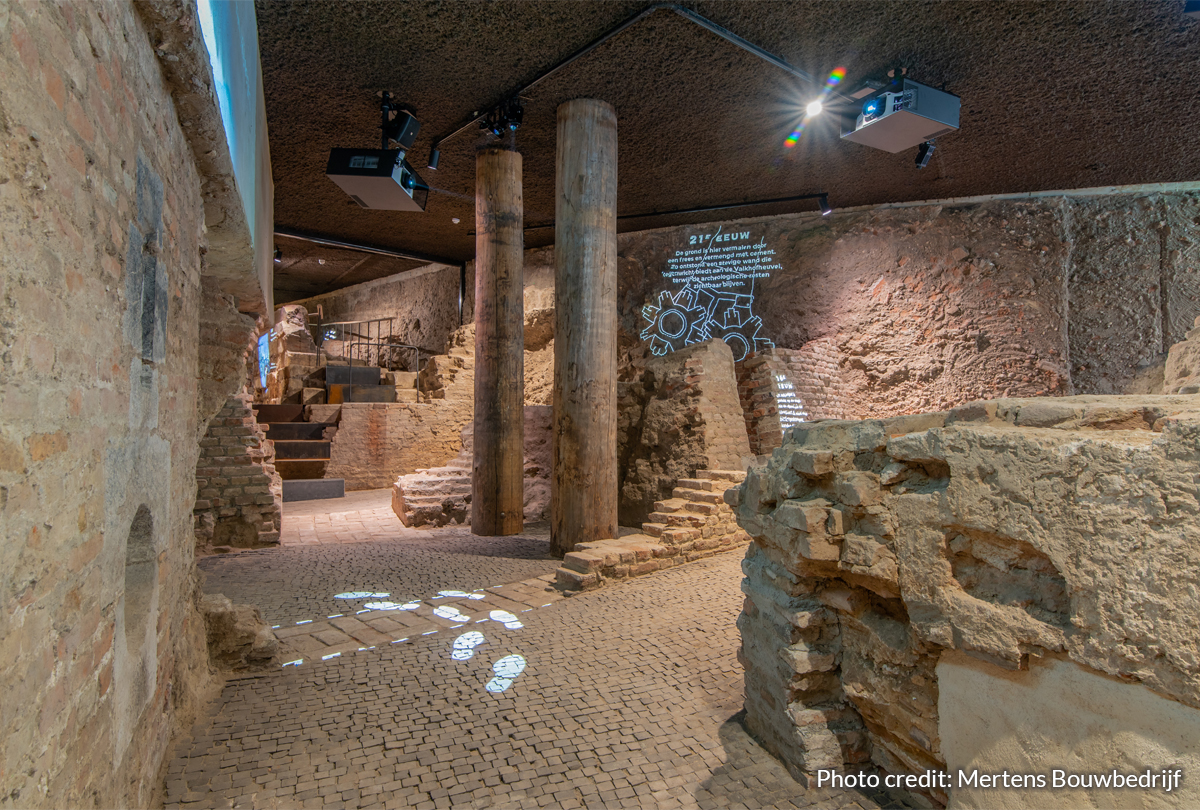
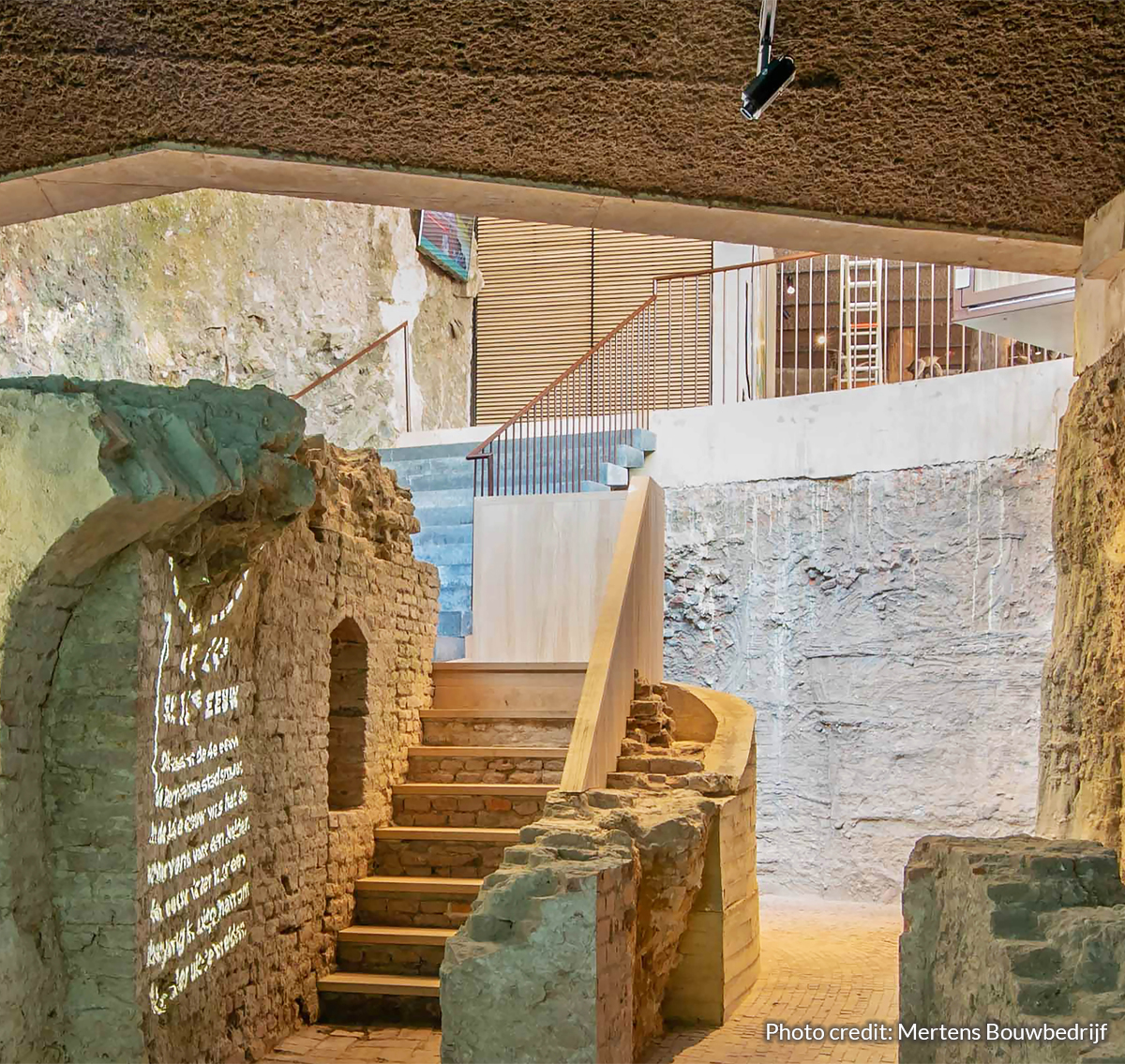
At the De Bastei cultural centre in Nijmegen, Image Spots and video projectors place text and graphics about archaeological finds precisely where those finds were discovered — light doing the work of a label, without cluttering the space.
Projected from oblique angles with the fixtures barely visible, the images stay bright and legible against the raw architecture. It’s a clear demonstration of light carrying content, not just brightness.
What shapes a clean result
A projected image is only as good as its optics, its artwork and its position. CFATS can prepare artwork and test the projection before you commit.
Line art, greyscale and full-colour translate differently. Glass gobos carry tone and colour; steel suits bold shapes. We advise on the right medium for your image.
Image size is set by throw distance and lens. We calculate the geometry so the image fills the intended surface precisely.
Oblique positions are usually necessary to conceal the fixture; framing and keystone correction keep the image square.
Legibility depends on contrast against surrounding light. We assess the real conditions to pick the right output.
Related tools and intents
Have an image you need to place?
Send us the artwork, logo or effect you want to project and where it needs to land — we’ll prepare the gobo, test the projection, and specify it for supply in Australia.